
What Is Postpartum Depression? Distinguishing It from the "Baby Blues" So You Don't Miss Warning Signs | Safe and Sound
After giving birth, many mothers experience days of fluctuating emotions: one moment they're happy watching their baby sleep, the next they're crying in the middle of the night for no apparent reason. Family and friends often reassure them: "It's normal, you've just given birth. It'll be over in a few days." So what exactly is postpartum depression? How is it different from "baby blues"? And how can you recognize it to avoid missing the crucial time to seek support?
What is postpartum depression?
After giving birth, mothers may feel tired, easily upset, cry frequently, or feel like they're not the same as before. But if feelings of sadness, emptiness, exhaustion, or disconnection from the baby persist, it's no longer just "new mom being sensitive." Understanding postpartum depression correctly will help mothers and families recognize the problem sooner, instead of leaving the mother to suffer in silence.
Definition and incidence rate
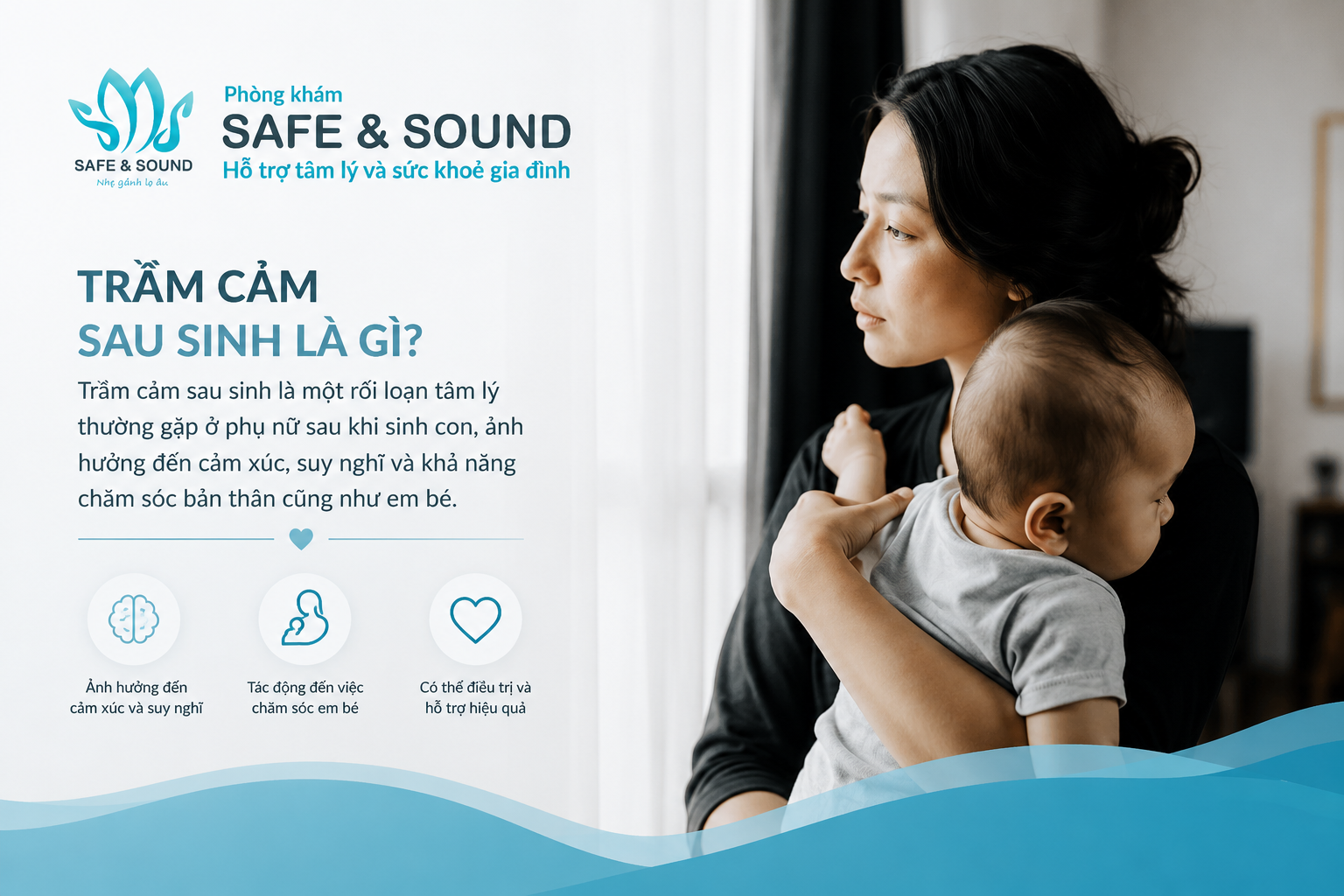
Postpartum depression is a mental health condition that can occur after childbirth, with symptoms that persist and significantly affect a mother's daily life. It's not a fleeting emotional reaction, nor is it a sign of weakness or a lack of love for the child.
Postpartum depression is far more common than many people realize. An estimated 1 in 7 mothers experience it after giving birth – a number large enough to indicate it's a real public health problem, not an isolated incident.
It's important to emphasize from the outset: postpartum depression doesn't happen because the mother isn't strong enough, doesn't love her child enough, or doesn't know how to be a mother. It's a syndrome influenced by many biological, psychological, and situational factors and is entirely treatable when identified correctly.
When does postpartum depression typically appear?
Many people think postpartum depression only occurs in the first few weeks after giving birth. That's not entirely true.
Postpartum depression can appear at any time within the first 12 months after childbirth, and in some cases, it can start later, when the baby is already 6 to 9 months old. This often leads mothers and their families to overlook the connection between the symptoms and childbirth, resulting in either ignoring the symptoms or looking for other causes.
Furthermore, postpartum depression doesn't only affect mothers. Studies show that fathers can also experience similar symptoms during this period, although it's less frequently discussed.
See also: How to prevent postpartum depression?
Baby blues and postpartum depression: What are their similarities and differences?
This is the most common point of confusion and also the reason why many cases of postpartum depression are overlooked for too long. Baby blues and postpartum depression share many similar outward symptoms: crying easily, mood swings, fatigue, and anxiety.
Therefore, it's easy to confuse one situation with another, especially when those around, even the mother herself, are in the process of adapting to significant changes. The most important difference lies not in the type of emotion, but in its duration and the extent of its impact on life.
|
Criteria |
Baby Blues |
Postpartum depression |
|
Time of appearance |
Usually within the first 2–3 days after birth. |
It can appear at any time during the first 12 months (especially the first 2-3 months). |
|
The duration |
It usually improves on its own within a few days or the first two weeks. |
Lasting more than two weeks, it could be months if support is not provided. |
|
Level of impact |
Emotionally volatile, easily moved to tears, but still able to take care of herself and the baby. |
It clearly affects sleep, eating habits, childcare abilities, and relationships. |
|
Will it go away on its own? |
It usually resolves on its own when hormones stabilize. |
It usually doesn't resolve on its own and requires assessment and support. |
|
Is professional intervention needed? |
Usually not necessary, just rest and support from family. |
Should be evaluated by a mental health professional. |
The line between these two states isn't always clear from the start. That's why it's so important to monitor developments over time and avoid jumping to conclusions too quickly about which direction to go.
If after two weeks the discomfort persists, or shows signs of worsening instead of improving, it's time to seek professional help instead of waiting any longer.
Warning signs of postpartum depression that many mothers often overlook.
Not all signs of postpartum depression are easy to recognize. Some symptoms are easily "rationalized," meaning the mother and family find a different, seemingly plausible explanation, causing the true signs to be overlooked.
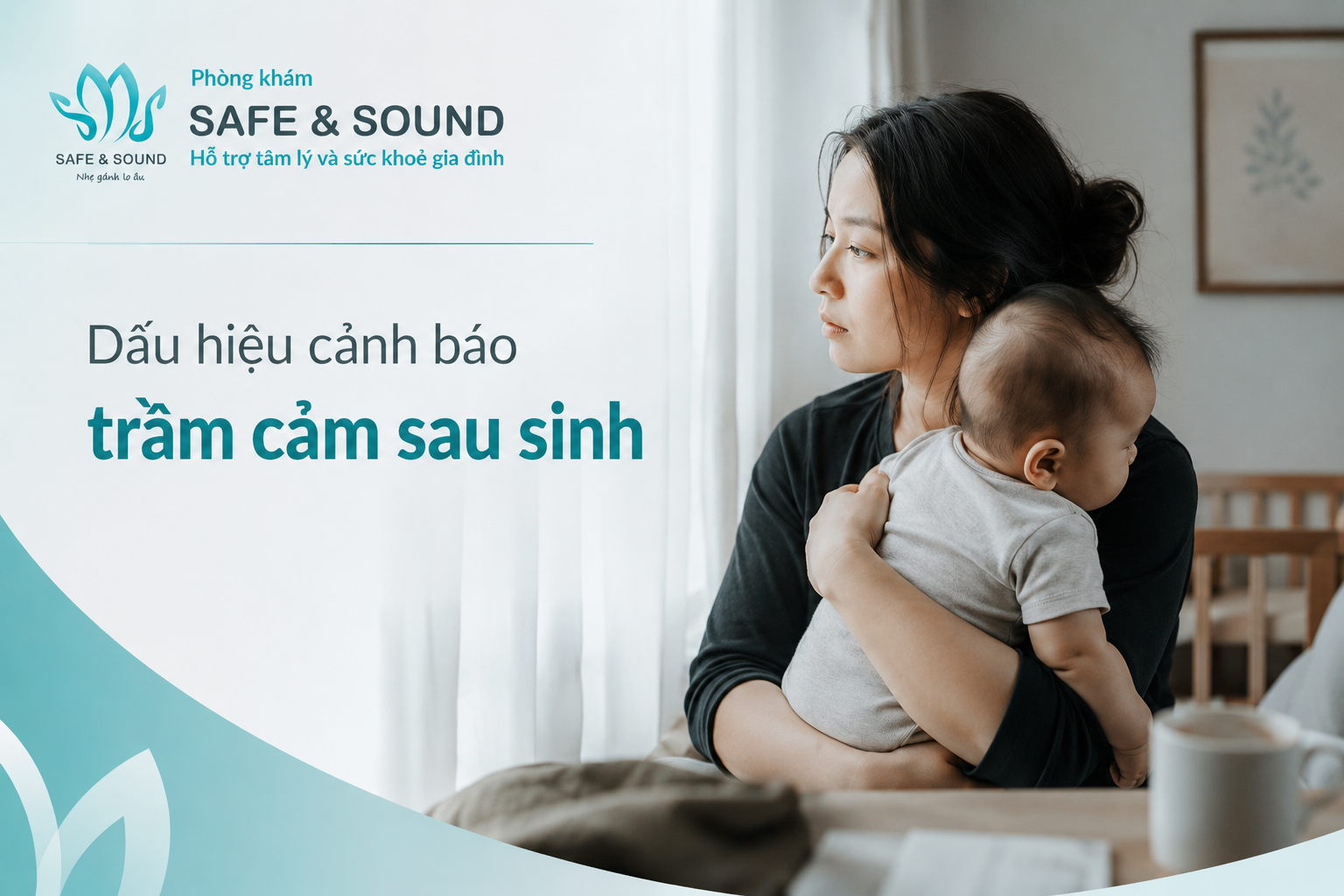
- "I'm just tired from taking care of the baby," but it's actually irreversible emotional exhaustion that persists even after rest. The difference is: fatigue from lack of sleep usually improves significantly after rest. Exhaustion from depression, however, doesn't improve even with sufficient sleep; the mother wakes up feeling empty and heavy-hearted.
- "Not wanting to see anyone because of the children" is actually a deliberate act of withdrawal and disconnection. The mother begins to avoid conversations, doesn't want to share her feelings, feels misunderstood, and gradually becomes accustomed to silently enduring everything alone.
- "Being irritable due to lack of sleep" is actually a loss of emotional control in an unusual way. Feelings of anger, frustration, or resentment appear constantly, disproportionate to the situation, and are often followed by feelings of guilt.
- "Anxiety about being a first-time mother" is actually an uncontrollable, high level of anxiety. Worrying about your baby is normal, but when the worry becomes so overwhelming that you can't sleep, rest, or think about anything else, it's a sign that needs attention.
One less-discussed but important sign is a feeling of distance or lack of emotional connection with the baby. Many mothers with postpartum depression don't experience the natural bonding with their child they expect, and this makes them feel ashamed and hesitant to share with anyone. This isn't the mother's fault. It's a symptom of postpartum depression and is entirely reversible with the right support.
It's important for families to understand this so they don't unintentionally cause harm.
Postpartum depression isn't just a mother's problem. How the family reacts, what they say and don't say, can make a huge difference in whether or not the mother dares to seek help. Some seemingly encouraging statements actually lead the mother to blame herself even more:
- "Your child is well cared for, so why are you still sad?": This phrase unintentionally conveys the message that the mother's emotions are unreasonable and selfish.
- "Hang in there, everyone goes through this after giving birth": This is true for baby blues, but if said to someone experiencing postpartum depression, it makes them feel like they have to overcome it alone and are afraid to talk about it anymore.
- "Back in the day, my grandmother and mother were the same, and nothing bad happened." Comparing generations doesn't help, and sometimes even creates more pressure to be "tougher."
Instead, what the family can do is listen without judgment, without trying to explain or dismiss the mother's feelings. Sometimes, simply sitting beside her and saying, "I'm here with you, we'll get through this together!" is far more valuable than any advice, however well-intentioned.
If you notice a loved one exhibiting these symptoms for more than two weeks, gently suggesting they see a professional instead of waiting for them to realize it themselves may be the most important step you can take right now.

>> See also: Postpartum care: How to cope with postpartum depression
Conclude
What is postpartum depression? This question isn't meant to judge anyone, but to help you understand and act accordingly. The line between baby blues and postpartum depression is sometimes blurry, and not everyone recognizes it right away. The important thing isn't self-diagnosis, but listening to the changes happening and not forcing yourself to be "okay" when you're not truly okay.
The postpartum period is one of the most transformative times in a woman's life. Proper support during this period not only protects the mother's health but also safeguards the mother-child bond – the most crucial foundation for early childhood.
 At SNS (Safe & Sound Clinic), every mother is listened to with respect and without judgment. If you are wondering about what you are going through, even if you are not sure if it is postpartum depression, we are here to help you understand and determine the most appropriate support.
